Economics | 4 min read April 21, 2026
Nomura acted as sole lead manager for Shimizu Corporation’s first blue bond, providing end-to-end support — from the development of a blue bond framework through to financing — as Japan seeks to strategically accelerate offshore wind power.
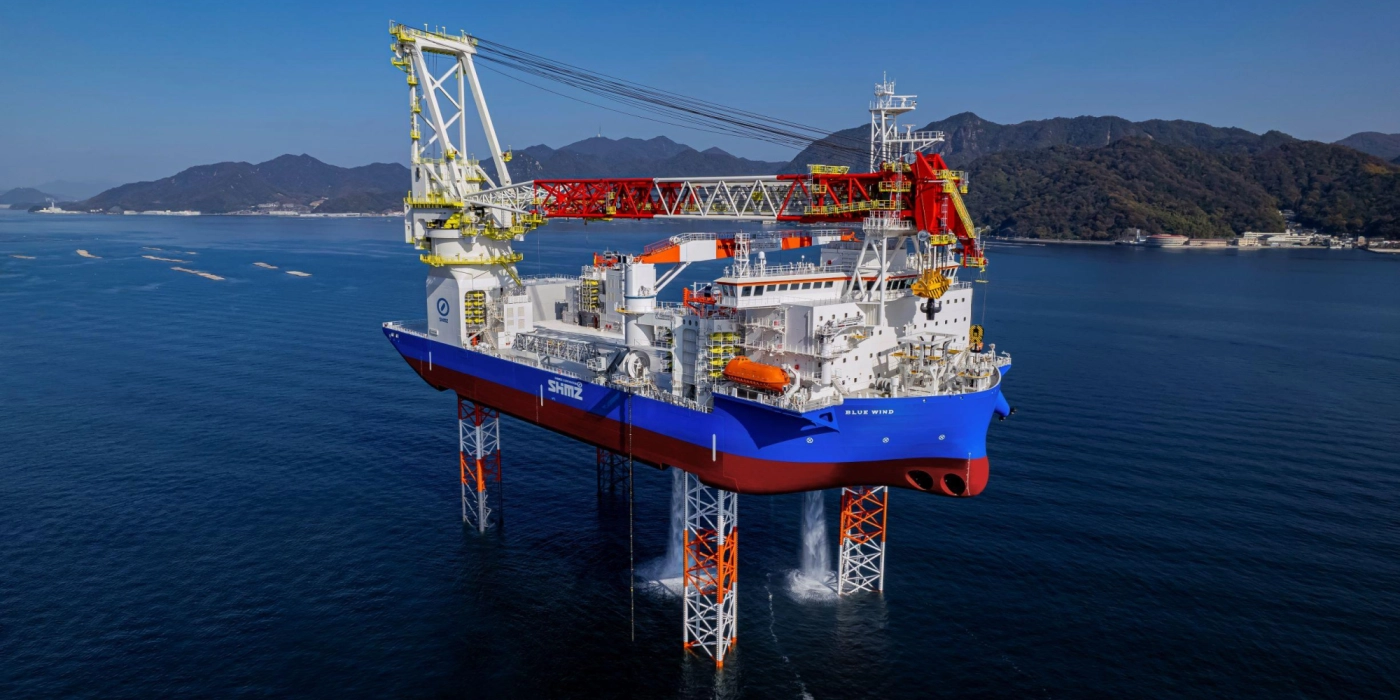
The proceeds of the bond are being used to finance Shimizu’s self-elevating platform (SEP), BLUE WIND, a specialized vessel that plays a central role in the construction of fixed offshore wind turbines. This was Japan’s first blue bond to finance an SEP vessel.
Blue bonds are debt instruments designed to finance projects related to the ocean environment, which have positive economic and environmental benefits. Although most companies in Japan initially saw blue bonds as only being relevant to governments and to businesses focused on oceans or fisheries, Shimizu is helping to change that narrative.
“Shimizu’s business is mostly land-based, so this blue bond has shown the market that there are also ways for companies outside traditional ocean industries — such as construction or shipping — to issue blue bonds,” says Shun Machiyama, Head of the Sustainable Finance Section at Nomura Securities. “We expect it to contribute to the growth of Japan’s blue bond market.”
Offshore wind farms are a promising form of renewable energy for Japan, which is heavily dependent on energy imports to fuel its economy. Japan aspires to become more energy self-sufficient, while also pledging to meet net zero carbon emissions targets by 2050. The country’s Offshore Wind Power Industry Vision, compiled in 2020, set a goal to develop offshore wind power projects of 10 GW by 2030 and 30 to 45 GW by 2040.
Between 70%–80% of Japan is mountainous, and its densely populated areas and complex wind patterns make onshore wind energy significantly more challenging, creating a bigger opportunity for companies such as Shimizu that are involved in offshore development.
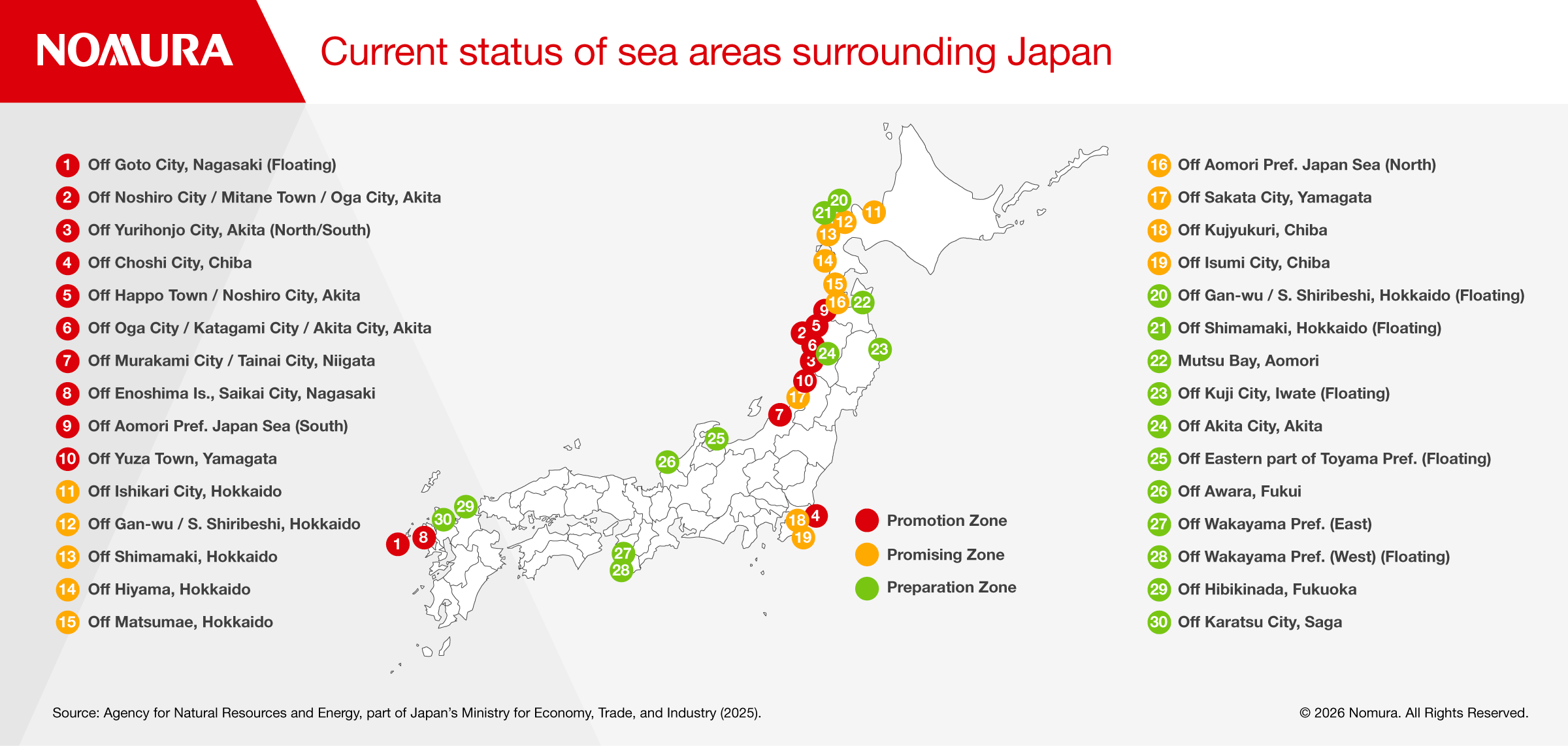
Moreover, the marine and ocean industry is one of Prime Minister Sanae Takaichi’s 17 strategic sectors, announced in November 2025. Others include artificial intelligence, semiconductors, and shipbuilding.
SEP vessels play a critical role in the efficient construction of offshore fixed wind turbines. An SEP vessel can lower its four legs to stand on the seabed, then raise its hull above the surface of the water. Even if weather conditions are poor and waves are high, it can remain stable and continue its construction work.
Shimizu’s SEP vessel BLUE WIND, which began operations in 2023, was built to strengthen the company’s competitiveness in the renewable energy sector and further expand its engineering business. It also represents one of the company’s initiatives toward realizing a decarbonized society under its environmental vision, SHIMZ Beyond Zero 2050. At 142m long and 50m wide, it is one of the world’s largest wind turbine installation vessels. It can transport all the components for seven 8MW turbines or three 12MW turbines at one time, helping to significantly reduce the duration of construction projects.
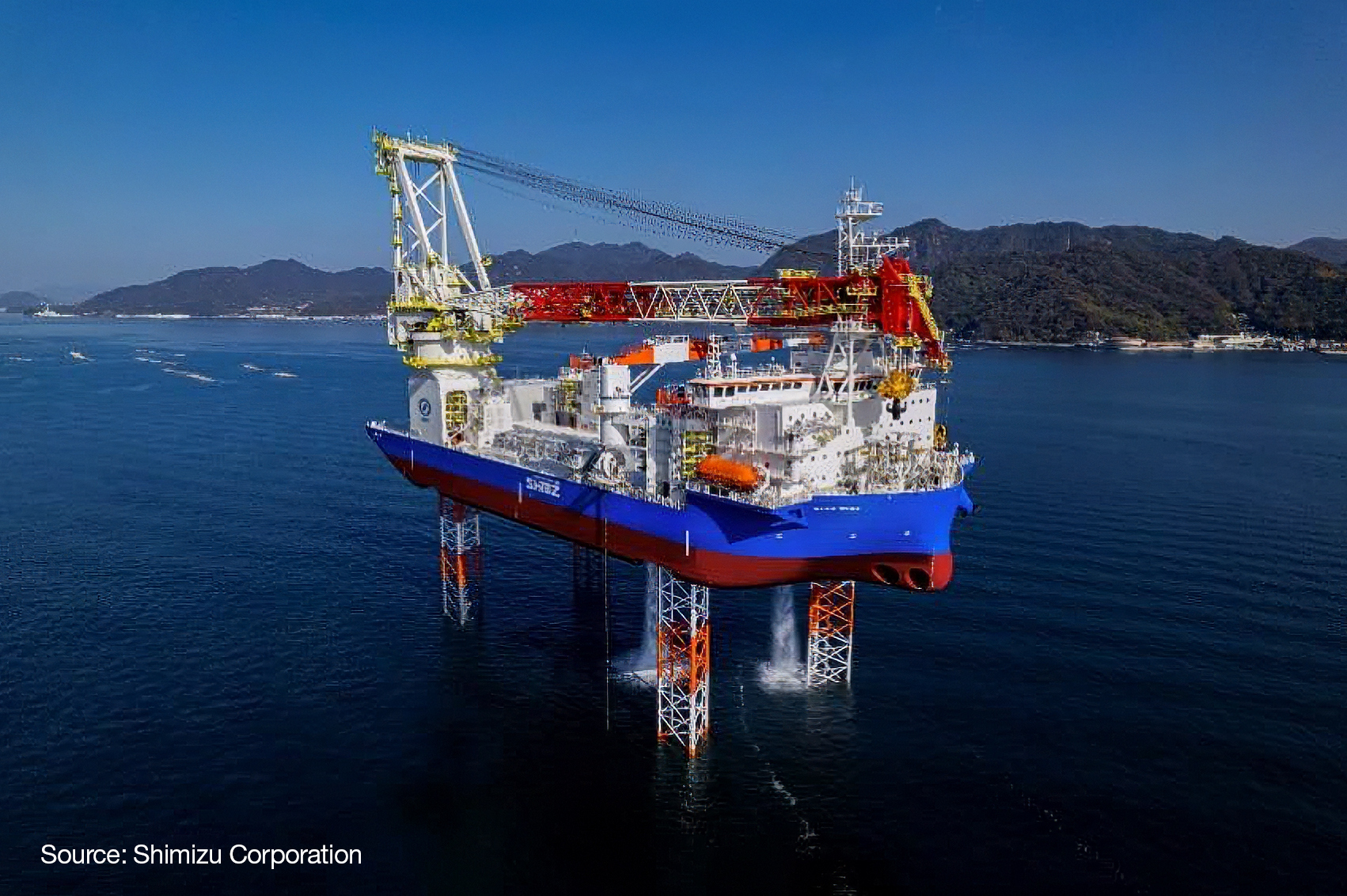
“We had the chance to step aboard BLUE WIND — and it was truly impressive,” says Moeka Sato of Nomura’s Sustainable Business Development Department. “I walked away thinking: People need to know what this vessel can do. BLUE WIND is exactly the kind of innovation that can accelerate the future of offshore wind energy.”
Nomura has a longstanding relationship with Shimizu and initiated discussions on issuing a blue bond in early 2025. In addition to acting as sole lead manager, Nomura advised Shimizu on a suitable second-party opinion provider, helped to develop a blue bond framework (established in December 2025), and ensured the bond aligned with certain principles and guidelines, including ICMA’s Green Bond Principles 2025.
To qualify as a blue bond, Shimizu demonstrated the project’s environmental benefits, such as its projected contributions to offshore wind generation, and its commitment to taking measures to reduce the impact on the ocean environment and marine life during construction.
Initially, the bond aimed to raise ¥10 billion ($63.5 million), but demand from investors was so strong that Shimizu doubled its target to ¥20 billion. Such intense demand was all the more remarkable as it came against the backdrop of a major Japanese player pulling back from the offshore wind sector, citing surging construction costs.
“This blue bond issuance shows that investor appetite remains strong for sustainable finance instruments from trailblazing companies,” says Machiyama.
The blue bond business in Japan seems poised for growth. Since Shimizu’s blue bond, Nomura has received inquiries from other companies about issuing blue bonds.
“Companies are beginning to understand that this kind of sustainable finance is a good way to convey — appealingly and credibly — their story to the market, and what they are aiming to achieve,” says Sato.
For more information, please contact Shun Machiyama or Moeka Sato

Head of Sustainable Finance, Japan

Associate, Sustainable Finance, Japan
This content has been prepared by Nomura solely for information purposes, and is not an offer to buy or sell or provide (as the case may be) or a solicitation of an offer to buy or sell or enter into any agreement with respect to any security, product, service (including but not limited to investment advisory services) or investment. The opinions expressed in the content do not constitute investment advice and independent advice should be sought where appropriate.The content contains general information only and does not take into account the individual objectives, financial situation or needs of a person. All information, opinions and estimates expressed in the content are current as of the date of publication, are subject to change without notice, and may become outdated over time. To the extent that any materials or investment services on or referred to in the content are construed to be regulated activities under the local laws of any jurisdiction and are made available to persons resident in such jurisdiction, they shall only be made available through appropriately licenced Nomura entities in that jurisdiction or otherwise through Nomura entities that are exempt from applicable licensing and regulatory requirements in that jurisdiction. For more information please go to https://www.nomuraholdings.com/policy/terms.html.
Economics | 4 min read April 21, 2026