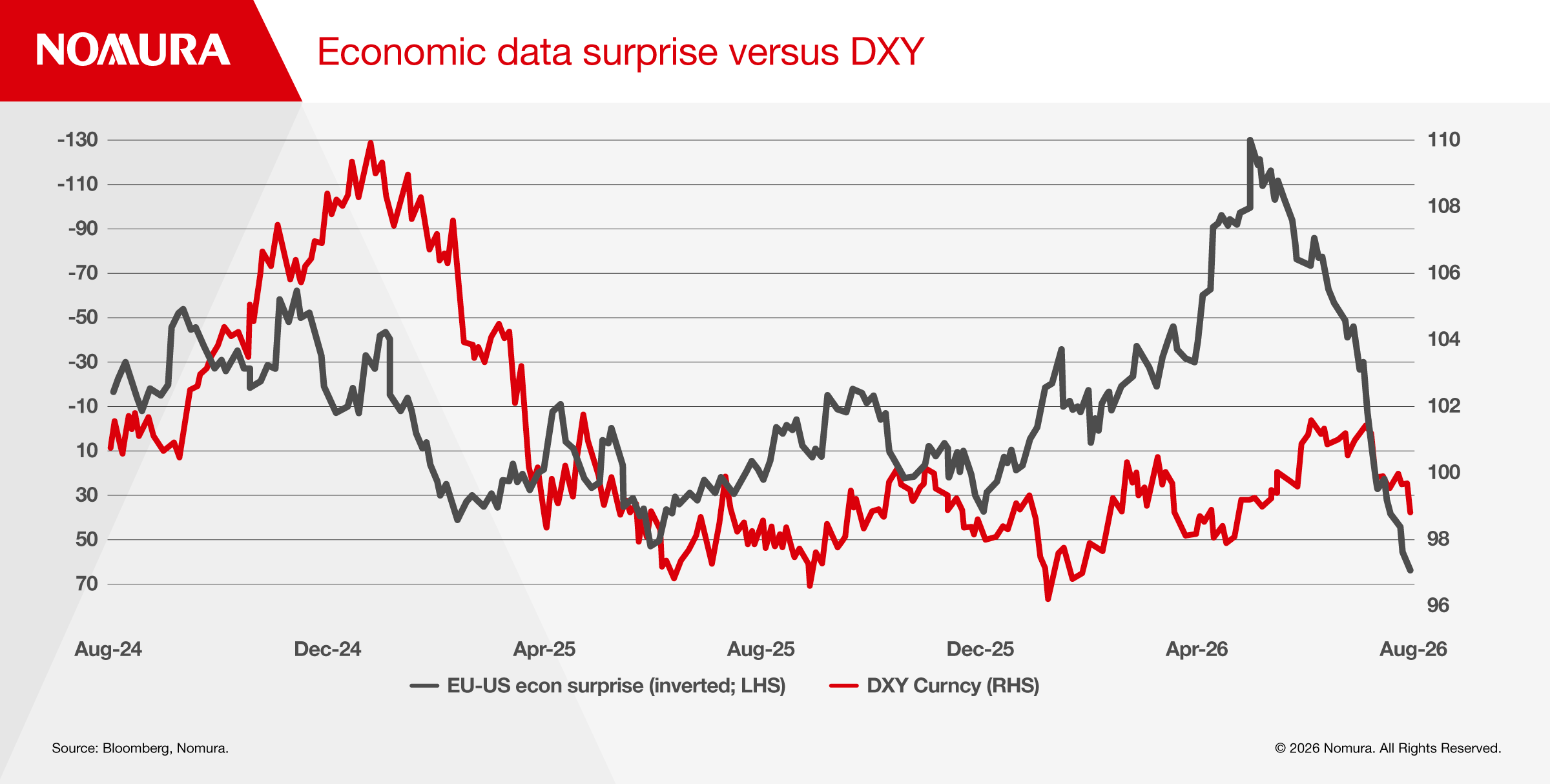
Since mid-July, we have been leaning toward a softer USD. Our reasons for taking this view include lower US inflation (and our expectations for subdued inflation prints ahead), our forecast for the FOMC to leave rates unchanged, and the risk of an unwinding of long USD positions. By the end of July, the combination of a more dovish Fed Chair Kevin Warsh at the post-FOMC press briefing and the joint US–Japan FX intervention to support the yen led the dollar significantly lower.
Expectations for further USD weakness are building, and we see several factors at play:
- The market is increasingly fearing a US economic slowdown
There have now been two months of weaker-than-expected nonfarm payrolls, as well as weaker consumer demand signals from the July retail sales contraction.
- Economic data has brought surprises
In recent months, European economic data has surprised to the upside relative to expectations, particularly compared with US data. Historically, this has been relevant to the performance of USD. We believe that signs of the US economy slowing more significantly in late February and early March 2025 added to the over 3% weakening of USD in March 2025 (Figure 1).
- Low US inflation and weaker economic data should keep the Fed on hold
Our US economists continue to forecast subdued US inflation. There is also scope for the next August core CPI release (due September 11) to remain muted, as the downside risks from a likely moderation in rent and tariff-related components may offset the possible upside from higher consumer electronics and gadgets prices.
- The US has attempted to curb the rise in long-end yields
On August 19, the US Treasury announced that it would “at least double” its buybacks of Treasurys with maturities of 10 to 30 years. This reveals an increased sensitivity to the rise in long-end yields. Market discussions have revolved around whether the 10-year Treasury yield will break the psychologically important 5% level. This could result in a non-linear move higher and adversely affect US asset markets, such as housing and equities. However, suppressing the term premium on the long end would risk a drop in demand for Treasurys — potentially adding to USD weakness.
- Fed independence concerns are on the rise
Although the Fed left rates unchanged at the July meeting, the risk around its independence has grown. Media reports have noted that President Donald Trump has been repeatedly calling Warsh and that Trump was renewing his efforts to remove Powell and Cook.
- The market is still broadly long USD
Following the US–Japan joint FX intervention, there has been some unwinding of long USD positions, mainly against JPY. Overall, our analysis suggests that the market is still broadly long USD against currencies such as EUR and NZD. This positioning would remain a risk to USD if the US macro deterioration theme gains traction, as would actions by the US Treasury and Trump administration to cap US rates.
Some risks to monitor
Although there are several factors weighing against the dollar, we still see some positive supports that we will continue to monitor. These include the strong foreign equity inflows into the US, still-elevated global energy prices as a result of the Strait of Hormuz remaining largely closed, and some re-establishment of FX carry trades since the start of August.
Also, US Treasury Secretary Scott Bessent has recently been attempting to win back US fiscal credibility, but markets will probably remain skeptical about the fiscal outlook, leading to a weaker USD — especially if the authorities step up their actions to cap upward pressure on US yields.
And Trump announced “economic warfare” against Iran on August 20. However, there are a number of risks to implementing actions against countries that trade with Iran. If significant sanctions were imposed on China, a major trade partner of Iran, this could increase US–China tensions, with China possibly retaliating against the US. Our view is that the US is likely to desire a stable relationship with China and the announced US actions will not have a significant impact on China.
However, over the medium term, our view of a weaker USD remains intact.