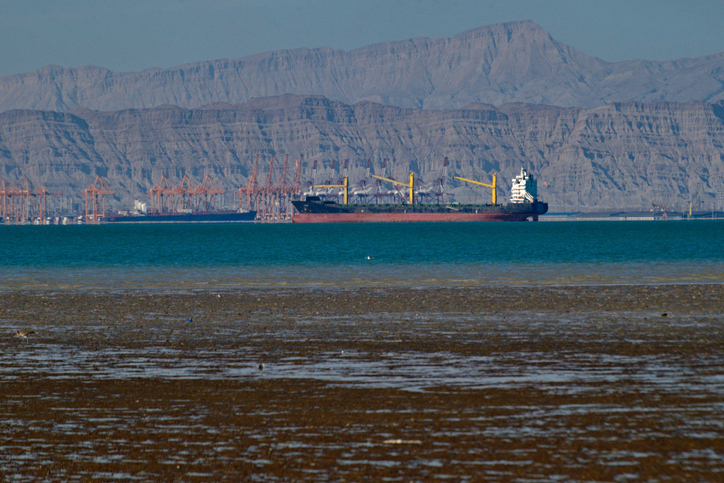
The outbreak of hostilities with Iran has dramatically raised economic uncertainty worldwide. Europe is highly dependent on oil and gas imports, but the European Central Bank (ECB) highlighted that it is well positioned to navigate this uncertainty. In contrast, as a net energy exporter, the US economy is largely insulated from recent energy price moves. Asia is doubly exposed to rising energy prices, as it is a large net importer of energy, and a disproportionate share of its oil, gas and fertilizer imports pass through the Strait of Hormuz. Thailand, Korea and India are among the most vulnerable economies.
US: Inflation pressures should keep the Fed on hold
Growth momentum in the US has accelerated, supported by easing tariff uncertainty, fiscal stimulus from the One Big Beautiful Bill Act and the lagged impact of Fed rate cuts amid easy financial conditions. A broad range of employment indicators continue to suggest a stabilization following last year’s slowdown – the unemployment rate should begin to decline and reach 4.0% by year-end. We believe the US economy remains relatively insulated from the crude oil price shock, given the small share of energy goods consumption in household spending, as well as domestic energy production.
Core inflation remains well above the Fed’s 2% target, and we believe risks are skewed to the upside. Against this backdrop, we expect no more rate cuts under Powell’s tenure as the Fed chair. Owing to the change in the Fed leadership and easing inflation concerns, we forecast two cuts in the second half of the year, in June and September.
Europe: ECB well positioned to wait and see
Euro area GDP growth would take a hit from higher energy prices due to the euro area being so heavily reliant on energy imports, as well as likely weaker consumer and business sentiment amid heightened uncertainty. Moreover, weaker global GDP from higher energy prices would weigh on demand for euro area exports. As a rule of thumb, we believe a 10% rise in energy prices would lower euro area GDP by 0.2pp cumulatively over two years.
Our view for inflation is heavily dependent on how the ongoing conflict in the Middle East affects energy commodity prices and how these feed into euro area price-setting. We revised up our euro area inflation forecast for the year to 3.1% y-o-y, which we expect to slow to 2.5% in 2027. The ECB’s focus is on whether its medium-term inflation outlook is affected, and whether there are second-round effects that result in underlying inflation persistence. This is crucially dependent on “the intensity and duration of the conflict”.
China: Beijing lowered 2026 growth target to 4.5-5.0%
Given the downward pressure imposed by the property sector, the payback effect from the scaled-down trade-in program and falling potential growth, China’s adjustment of its GDP growth target from “around 5.0%” to “4.5-5.0%” appears reasonable. The economic impact from the Middle East tensions is largely contained for China thus far. Although a sharp and sustained rise in global oil prices could push up China’s inflation and imports, the impact is less than for other Asian economies.
Still, given substantial headwinds in H1 2026, this new target could be quite challenging to achieve. We maintain our annual growth forecast of 4.3% and expect Beijing to step up fiscal expansion and deliver a 50bp RRR cut in Q2 2026 and a 10bp policy rate cut in Q4.
Japan: Fewer internal risks, more external risks
The most imminent risk for inflation is the extent and how long oil prices will be elevated. China’s ban on its exports of dual-use items also remains a risk.
In view of the Takaichi cabinet’s appointments of Toichiro Asada and Ayano Sato as board members of the Bank of Japan (BOJ), we think it is unlikely the direction of the BOJ's monetary policy (normalization of the degree of monetary accommodation) will change, because decisions will continue to be made in a collegial system. A prolonged conflict in the Middle East could prompt the BOJ to take a wait-and-see stance, at least in the near term. However, if the outlook becomes less uncertain, we believe they will be able to continue hiking interest rates, as they have done thus far. We still expect the next rate hike to be in June.
Rest of Asia: Tech/Non-Tech divergence continues
Broader Asia continues its tale of two speeds, driven by a sustained tech upcycle that contrasts with soft non-tech exports and a mixed outlook for domestic demand. We expect growth to surprise above consensus in Korea, Malaysia, Singapore and India, and lower in Thailand and the Philippines.
Korea's twin chip-housing supercycle should drive above-trend growth and keep the Bank of Korea on hold through end-2026. India's Goldilocks narrative of strong growth and low inflation persists, but risks being jeopardized by sustained Middle East tensions. Singapore stands to benefit from tech sector spillovers and strong domestic demand, which will likely lift core inflation above 2.0%.
Across the region, rising energy costs are pushing up pipeline price pressures, suggesting inflation will likely climb from current low levels. Given escalating tensions in Iran, most central banks in the region are likely to remain on hold.