Economics | 5 min read September 2026

Geopolitics | 6 min read | September 2026
Finding Opportunities in an Uncertain World
Geopolitics, AI and market shifts are driving diversification
Geopolitics | 6 min read | September 2026
Geopolitics, AI and market shifts are driving diversification
Investors in Asia face wide-ranging challenges when deciding how to allocate capital. They range from big-picture questions about fractious geopolitics and the future of AI, to more technical questions about the correct balance between public and private markets. None of it is simple. But it does create opportunity along with the complexity.
It is tempting to think that the state of the world today is uniquely bleak: conflict in Iran and Ukraine, trade policy carried out through aggressive tariffs and confrontational rhetoric, a backlash against globalization arising from various imbalances. But some who have seen a few geopolitical cycles have taken a different view.
“Competition between major powers, and therefore the risk of conflict: these are inherent characteristics of international relations,” says Bilahari Kausikan, formerly Singapore’s Permanent Representative to the United Nations, speaking at the Nomura Investment Forum in Asia in June 2026.
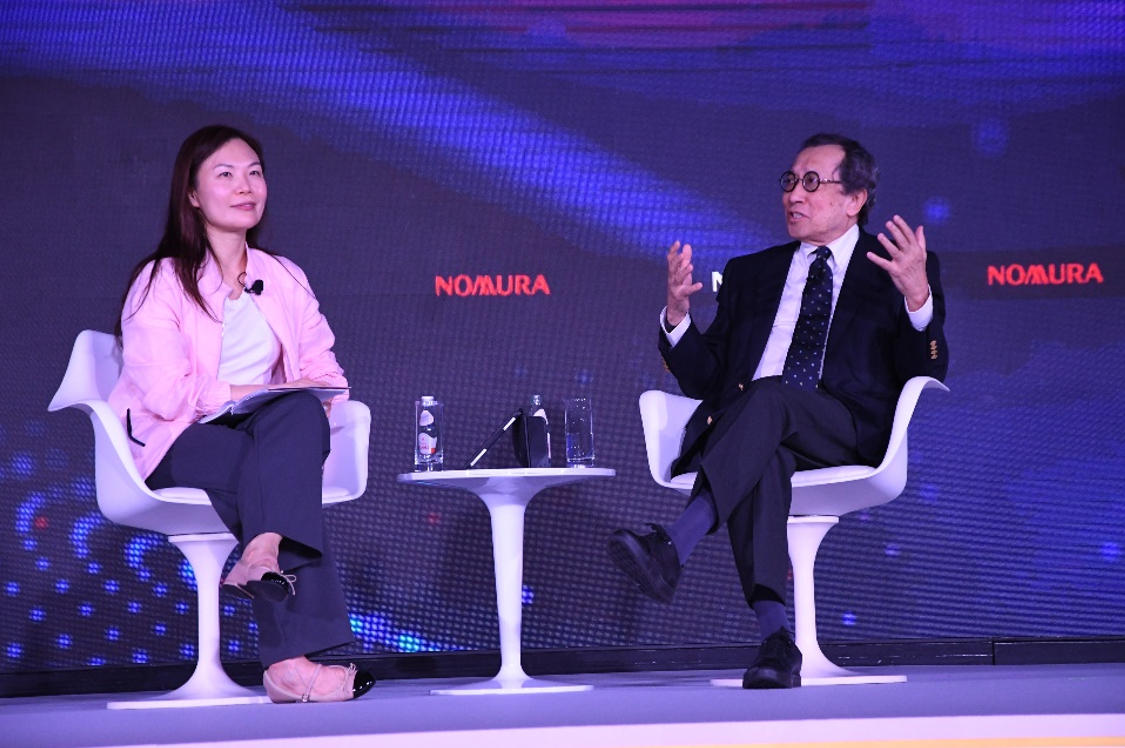
In his interpretation, the feeling of a consensus in the international order was an aberration that followed the fall of the Soviet Union. "That period is over and it’s not going to be recreated. But what we are experiencing now is in some way a reversion to the historical norm.
“The world is in a very complex space, and we will remain in this space for quite some time to come.”
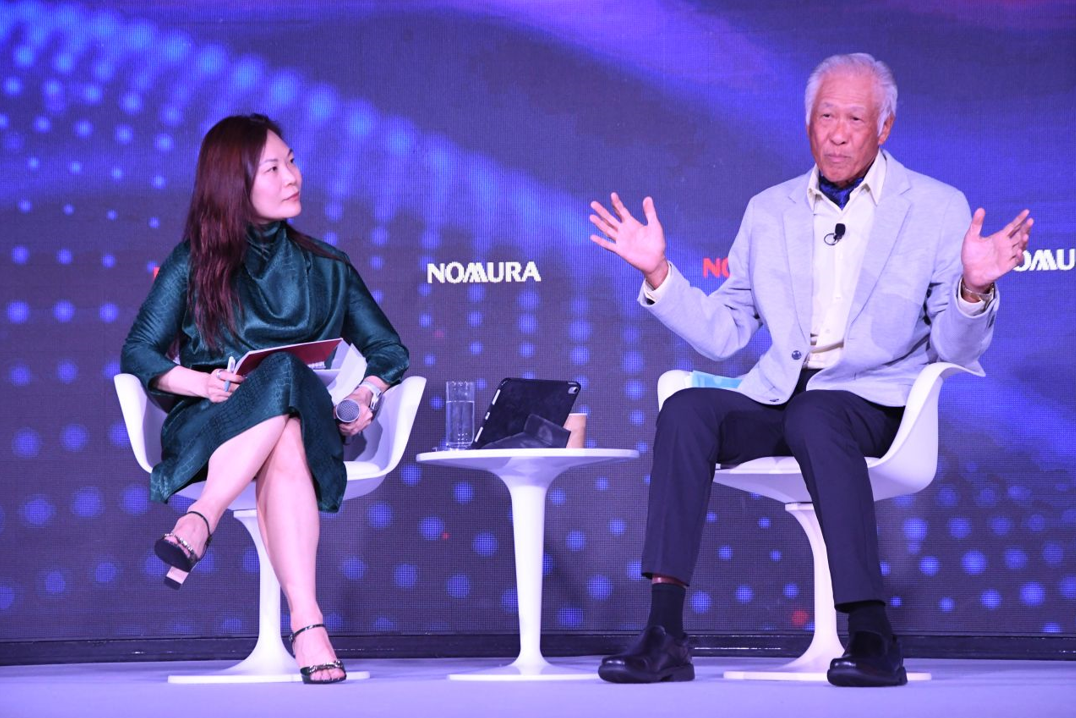
Ng Eng Hen, Singapore’s former Minister for Defence, has a similar view of an epochal time. “There are decades where nothing happens, and there are weeks where the decades happen,” – a quote often ascribed to Vladimir Lenin. “We are living through those times.”
If investors accept they must live with this new macro reality, they can find opportunity by examining the micro level of geopolitical impact.
An example is rare earths, more vital to the world than people tend to realize. “Rare earths are essentially all around us,” says Thomas Kruemmer, Director of Ginger International Trade & Investment, and editor of The Rare Earth Observer. “In your household, whatever you can switch on and off is enabled with small quantities of rare earth. It wouldn’t work without it.” Everything from cars to MRI machines, escalators to data centers, nuclear power plants to offshore wind farms, require rare earths.
But in 2025, China was responsible for 92.5% of the 400,000 metric tons of output of rare earths worldwide¹. This level of control by a single nation makes these precious resources vulnerable to changes brought about by geopolitics, such as a new export restriction implemented by China in April 2025 as a response to US tariffs². Investors who can analyze the outcomes of disruptions like this, and the need for impacted companies to seek new lines of supply, can gain an advantage from geopolitical change.
Few things are more pivotal to the world today than the future of AI, which has enormous potential consequences ranging from employment to ethics. But from an investor perspective, we aim to get into the weeds of what actually creates value rather than headlines.
A good example is large language model (LLM) technology. It is common to think of these models as a black box technology whose capability is the sole contributor to the value of AI. But investors who think that way are already out of date. “While models are very important, they are increasingly becoming commodities,” says Leslie Teo, Senior Director of AI Products at AI Singapore. “Models can create a lot of value, and they have. But you don’t get value creation just from the model.”
Teo argues that other things now drive value creation in AI. One is distribution, whether in open-source or closed-source form. Another is what he calls a harness, something that keeps people coming back to the same platform, such as an LLM’s memory of a user’s needs, and the tools the developer offers. Others include the embedding of AI in workflows, and the layers of governance that are necessary for any enterprise deployment of AI. Teo calls all of these things moats. “From an investor point of view, it’s not about whether an AI is open or closed, but where its moats are. That’s what drives valuation.”
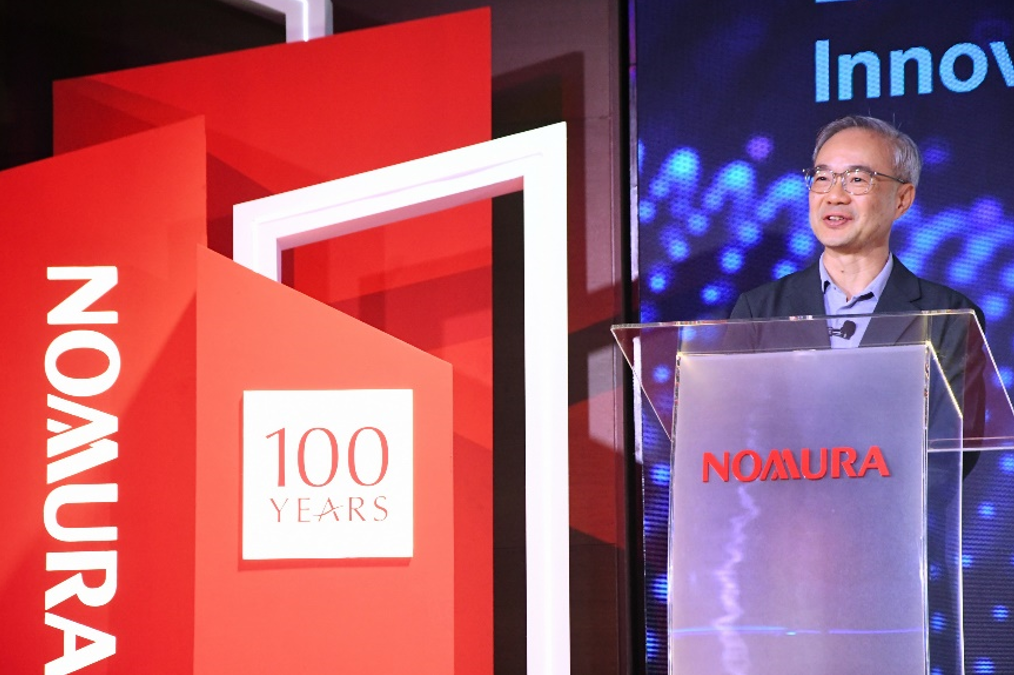
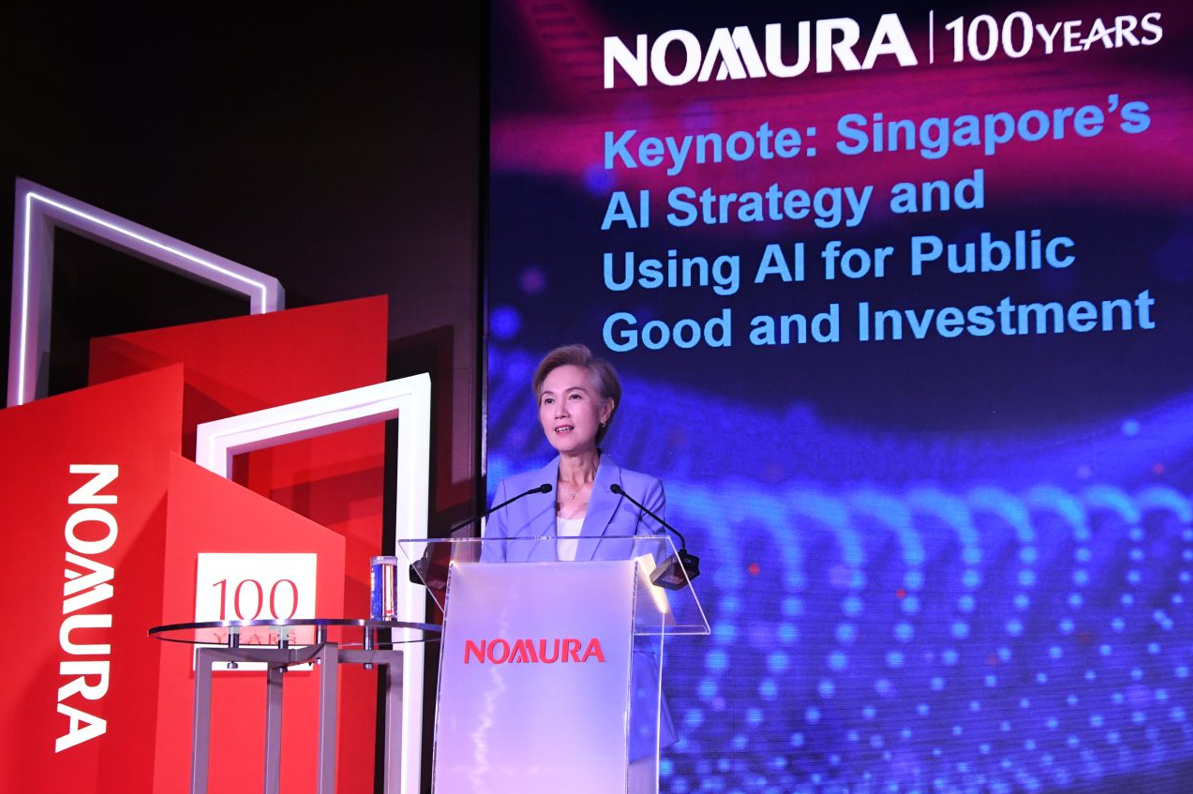
Josephine Teo, Singapore’s Minister for Digital Development and Information, similarly points to the broader foundations needed to create value from AI at scale. She emphasizes that AI tools need to be integrated meaningfully into businesses and supported by a workforce equipped to use them.
“Advanced tools and industry-specific models should not operate in a vacuum; they require a workforce that has the skills to guide, supervise, and integrate them safely into existing workflows,” she says.
This is part of Singapore’s broader approach to creating the conditions for businesses to adopt and scale AI.
“By providing the infrastructure, the trusted guardrails, and a skilled workforce, we ensure that businesses have a stable foundation to build and scale their AI solutions.”
The debate on value creation goes beyond AI. Deep structural shifts in the market, driven by geopolitics and an increasingly fast to market cycle of emerging technologies, mean investors are being forced to recalibrate portfolios to generate better returns.
The dynamics between public and private markets are increasingly influencing capital allocation decisions. With some public equity markets performing strongly this year (South Korea’s KOSPI Composite Index was up 99% in the year to June 12³, for example, and Taiwan’s TWSE up 53%⁴), questions are emerging on the advantages of investing in relatively more illiquid private markets when valuation gaps between the two are narrowing.
Emerging and developed markets are more divided than ever, with investing decisions coming down to their proximity to conflict zones and the impact of high energy prices. Economies like Latin America and Australia are seeing strong flows, while lower-rated emerging economies that are net exporters are also benefitting from investor interest. Economies impacted by energy shortage and geopolitics but still pushing ahead with AI developments are also seeing positive momentum.
Investors are changing how they view opportunities in Asia. They are no longer looking at investment from a regional lens but are taking a more localized, market-specific approach. Diversification across products, sectors and markets is becoming essential for return generation.
The outlook is for change: geopolitical change, technology change and market change. It makes for a bracing and intimidating environment for investors. But those who can step back from macroeconomic altercation and seek nuance amid the noise will find opportunities to exploit.
This content has been prepared by Nomura solely for information purposes, and is not an offer to buy or sell or provide (as the case may be) or a solicitation of an offer to buy or sell or enter into any agreement with respect to any security, product, service (including but not limited to investment advisory services) or investment. The opinions expressed in the content do not constitute investment advice and independent advice should be sought where appropriate.The content contains general information only and does not take into account the individual objectives, financial situation or needs of a person. All information, opinions and estimates expressed in the content are current as of the date of publication, are subject to change without notice, and may become outdated over time. To the extent that any materials or investment services on or referred to in the content are construed to be regulated activities under the local laws of any jurisdiction and are made available to persons resident in such jurisdiction, they shall only be made available through appropriately licenced Nomura entities in that jurisdiction or otherwise through Nomura entities that are exempt from applicable licensing and regulatory requirements in that jurisdiction. For more information please go to https://www.nomuraholdings.com/policy/terms.html.
Jump to all insights on Geopolitics
Economics | 5 min read September 2026
Annual Outlook | 5 min read August 2026
Economics | 4 min read June 2026